At Design Workshop, innovation fuels how we shape resilient and livable landscapes. Through DiGiLAB—our Digital Innovation and Generative Instruments Lab—we’re exploring how artificial intelligence can transform the way landscape architects integrate environmental performance into design.
What began as internal workshops and training sessions has evolved into a firmwide platform for research, experimentation, and technological advancement. As cities face rising temperatures, prolonged heat events, and rapid urbanization, the need for climate-responsive design has never been more urgent. Wind, shade, and microclimate are now central to shaping outdoor environments that foster comfort, equity, and resilience.
In 2025, supported by the Design Workshop Research Fellowship, DiGiLAB focused on a key challenge in this space: how to simulate environmental comfort conditions fast enough to inform early design decisions. Traditional Computational Fluid Dynamics (CFD) simulations, while accurate, are often too slow for iterative exploration.
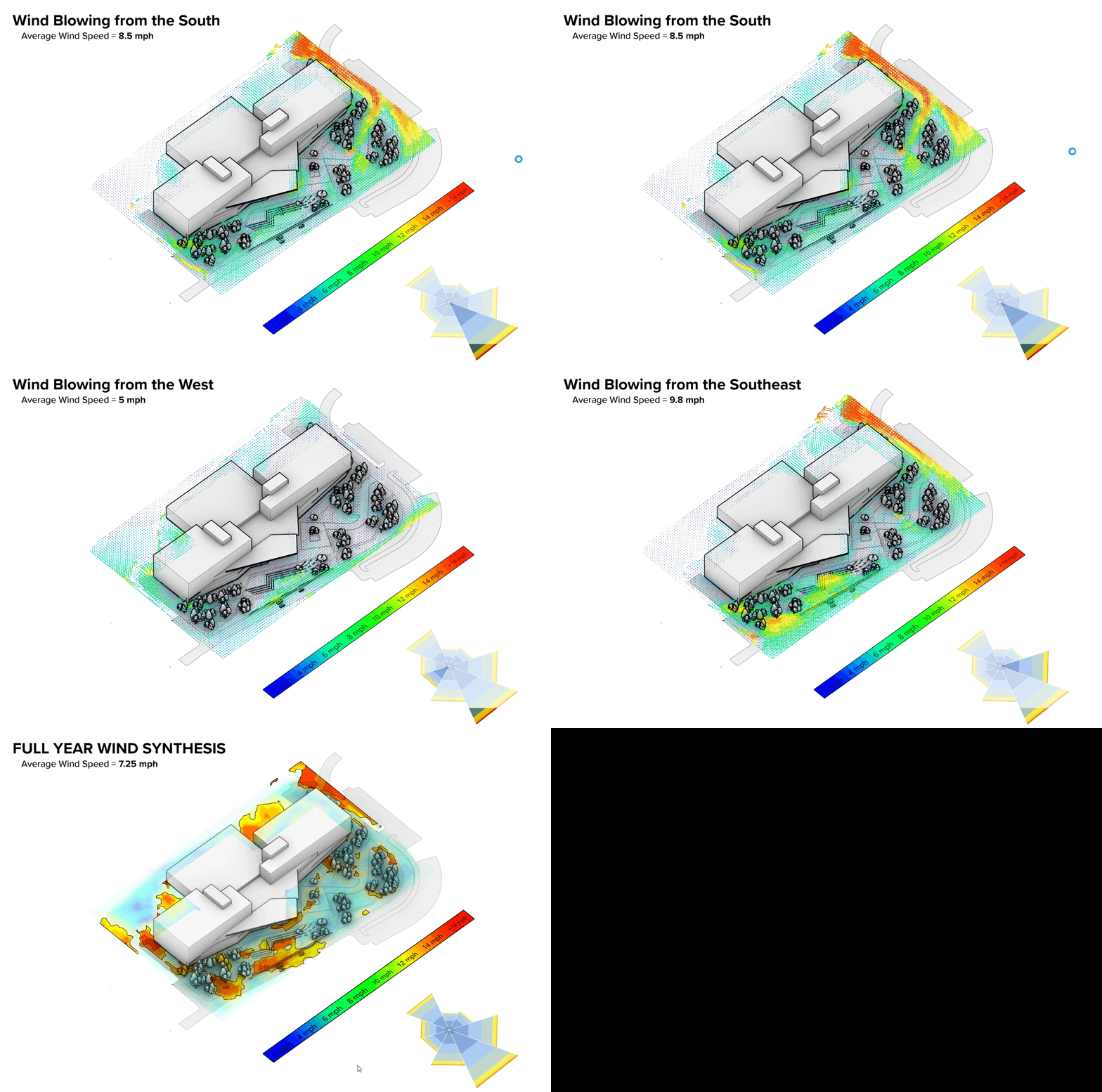
To close that gap, the team developed an AI-powered wind analysis tool using TensorFlow and a Pix2Pix generative adversarial network, trained on a dataset of CFD simulations. By learning how wind interacts with building massing, topography, and vegetation, the model predicts airflow patterns with a mean error margin of less than 8%, reducing analysis time from days to seconds. Embedded directly within Rhino-Grasshopper, the tool enables designers to evaluate wind comfort in real time, transforming environmental analysis into an instantaneous feedback loop.
This innovation is more than a technical breakthrough; it’s a practical one. By embedding environmental intelligence directly into design workflows, landscape architects can now make data-informed decisions from the earliest stages of a project, when design flexibility and impact are greatest. That means more responsive public spaces, healthier urban environments, and design outcomes that better anticipate the realities of a changing climate.
While this research currently focuses on wind, it lays the foundation for future tools addressing solar radiation, humidity, and thermal comfort. More broadly, it demonstrates how AI can complement traditional design processes, making environmental performance analysis faster, more accessible, and more actionable across the profession.