Across cities nationwide, acres of parkland sit quietly, unused and full of potential. That context, along with parks departments everywhere experiencing budget constraints, mean that these underdeveloped spaces hold the promise of becoming gathering places that reflect the people and cultures around them. In Austin, College Row Park became that opportunity. What began as 0.7 acres of vacant parkland grew into a movement about how residents can transform underused parks into vibrant, inclusive spaces that tell their shared story.
A History that Shaped the Land
Austin’s park system is rooted in a complicated history. The city’s 1928 Master Plan intentionally segregated communities of color into East Austin, leaving a legacy of inequity that continues to influence where people live, play, and gather today. Even as the city has grown and diversified, nearly two-thirds of its undeveloped parkland remains in East Austin, revealing a lasting imbalance in access to quality public spaces.
Recognizing this, Design Workshop partnered with the Austin Parks and Recreation (APR), Central Texas Interfaith (CTI), and the Design Workshop Foundation to explore new ways of activating these spaces, beginning with College Row Park.
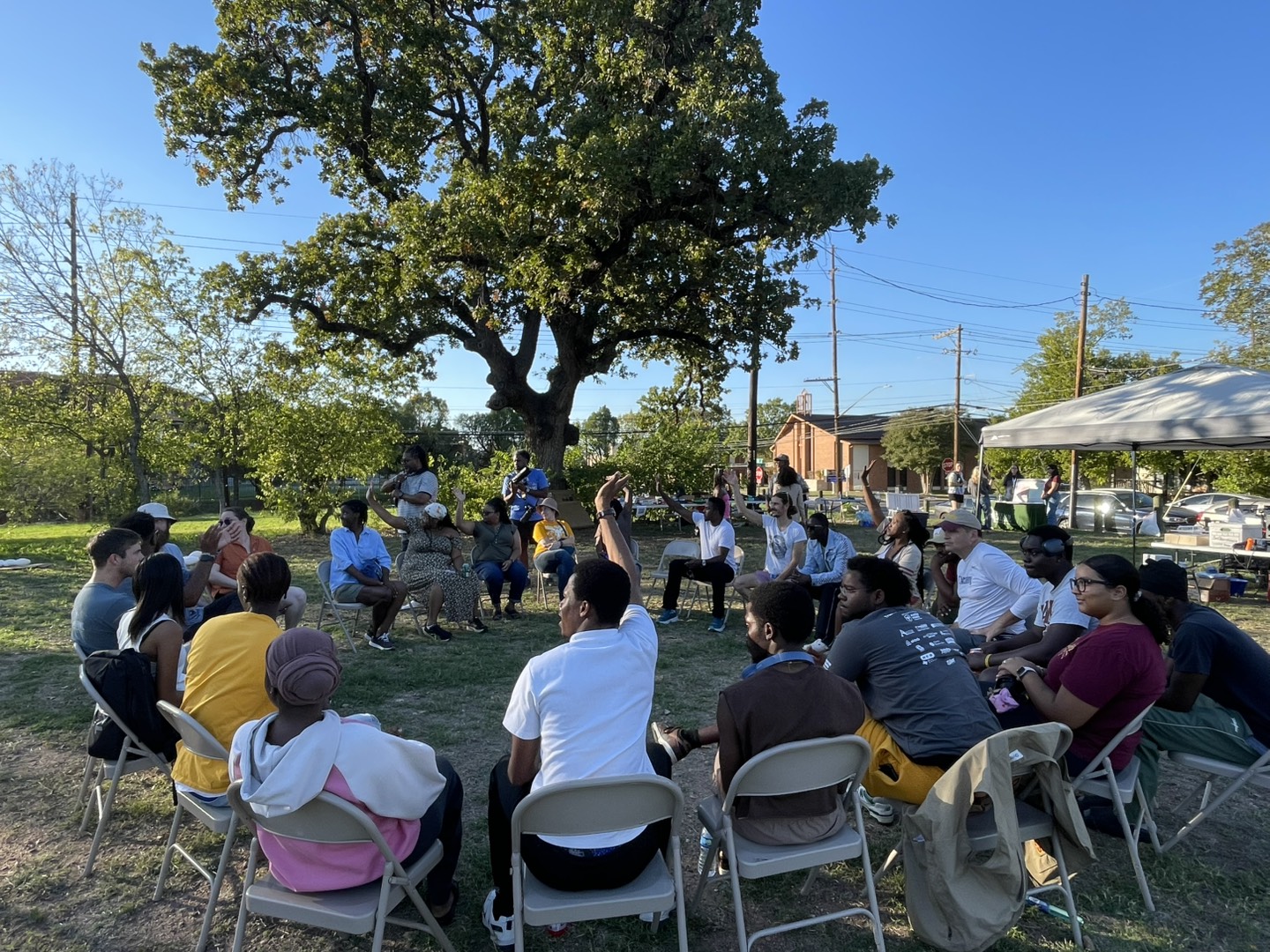
An additional community engagement for College Row Park was held on November 8 to continue advancing the project’s design and gather local input.
Listening First
Before any sketches or strategies emerged, the team began by listening. Residents, students, and longtime community members described how they’d like to use the park as a place for hosting block parties, growing food, gathering in the shade, learning outdoors, and sharing music and stories.
Students from nearby Huston-Tillotson University voiced both excitement and concern. They imagined gathering and studying in the park but also wondered whether they would feel welcome in a rapidly changing neighborhood. Their honesty revealed two persistent challenges: uncertainty about how to activate parks, and a complex permitting system that discouraged participation.
Turning Barriers into Pathways
Those insights led to the creation of the Park Activation Toolkit, a practical, step-by-step resource designed to simplify the process of using city-owned undeveloped parkland. The toolkit breaks down city requirements, clarifies which activities require permits, and links directly to the forms and resources needed to organize community events. In short, it transforms bureaucracy into empowerment. Instead of waiting for full-scale development, neighborhoods can begin bringing their parks to life, through neighborhood gatherings, outdoor classrooms, fitness classes, and community picnics.
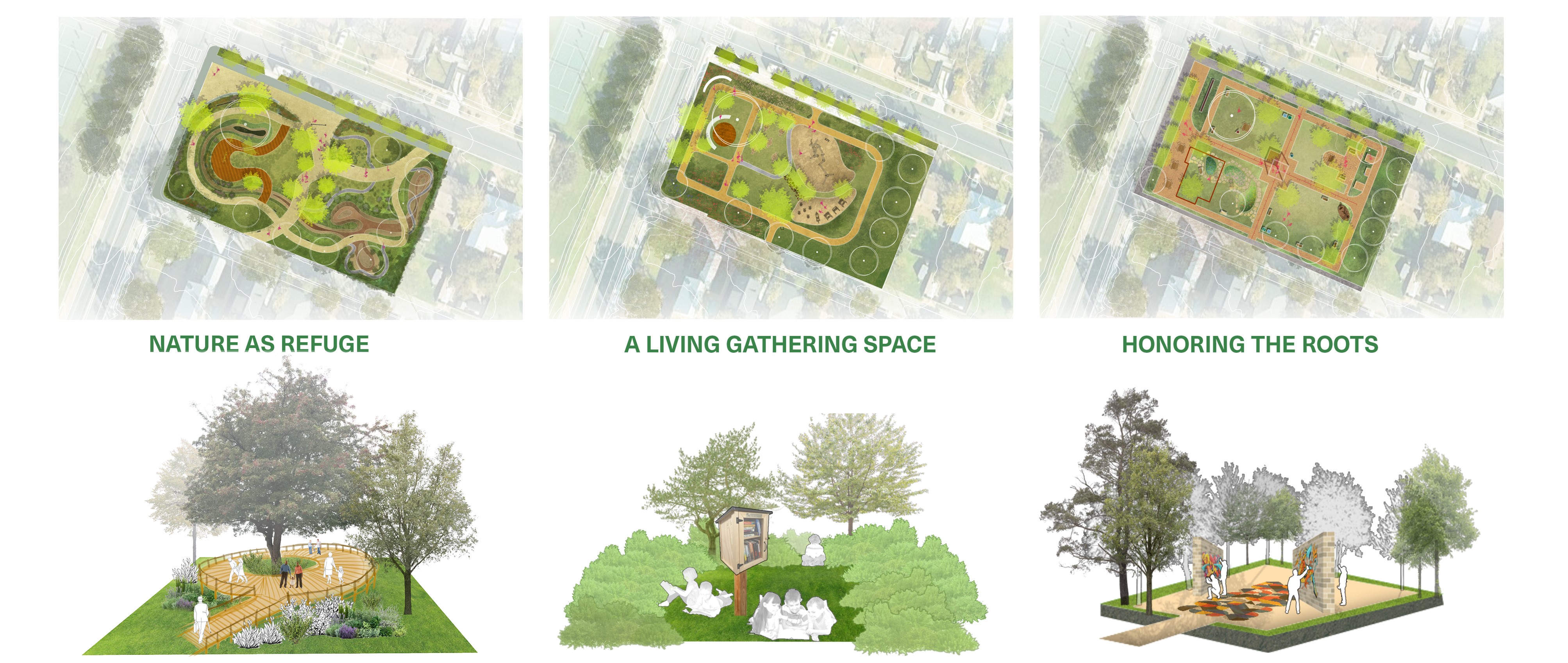
Collaboration as a Model
The success of the toolkit stems from deep collaboration. The partnership between APR, Huston-Tillotson University, Central Texas Interfaith, and the Design Workshop Foundation demonstrates how shared ownership creates sustainable outcomes. Each partner played a distinct role. Students offered fresh energy and creative ideas for programming. Longtime residents shared their deep knowledge of the neighborhood’s history and vision for its future. City leaders helped open doors, aligning policies, permits, and resources to turn those ideas into action. Together, their efforts show what can happen when collaboration moves from conversation to implementation. This work is not just about one park; it represents a new model for how cities can equitably activate public spaces by aligning design expertise with community knowledge.
Looking Ahead
College Row Park continues to evolve as a living classroom for collaboration. The effort was first established through the Design Workshop Foundation Capacity Building Initiative, where the framework for activation and partnership took root. Building on that foundation, Design Workshop’s Dr. Charles Fountain interns carried the work forward, advancing programming, storytelling, and design ideas that honored the site’s history while shaping its future. Today, along with the partners that were involved along the way, Design Workshop employees who also serve as Design Workshop Foundation ambassadors are continuing that momentum, deepening engagement and helping the community realize the park’s full potential. Each group has built on the progress of the one before it, demonstrating how sustained collaboration can create lasting impact.