East Raleigh South Park is one of Raleigh’s most significant cultural landscapes. Established by freedmen in the 1860s, the neighborhood grew through the work of Black educators, entrepreneurs, and civic leaders whose contributions shaped the city. Urban renewal interrupted this legacy, yet the community held on to its stories and sense of belonging. The South Park Heritage Trail carries this history forward. It transforms decades of advocacy into a collaborative design effort that restores visibility, strengthens connections, and honors a cultural landscape shaped by generations.
Listening as the Foundation of Design
The project began with a commitment to listen. Residents partnered with landscape architects, planners, historians, and designers to share memories, maps, photographs, and family stories. These conversations revealed how places once used for business, worship, learning, and gathering were connected. Layering oral history with spatial analysis created a deeper understanding of the importance and impact of this space. The trail alignment becomes more than a path; it becomes a record of resiliency carrying the memories of people who lived through rapid change and disinvestment. Design became a way to witness, remember, and bring these stories back into view.
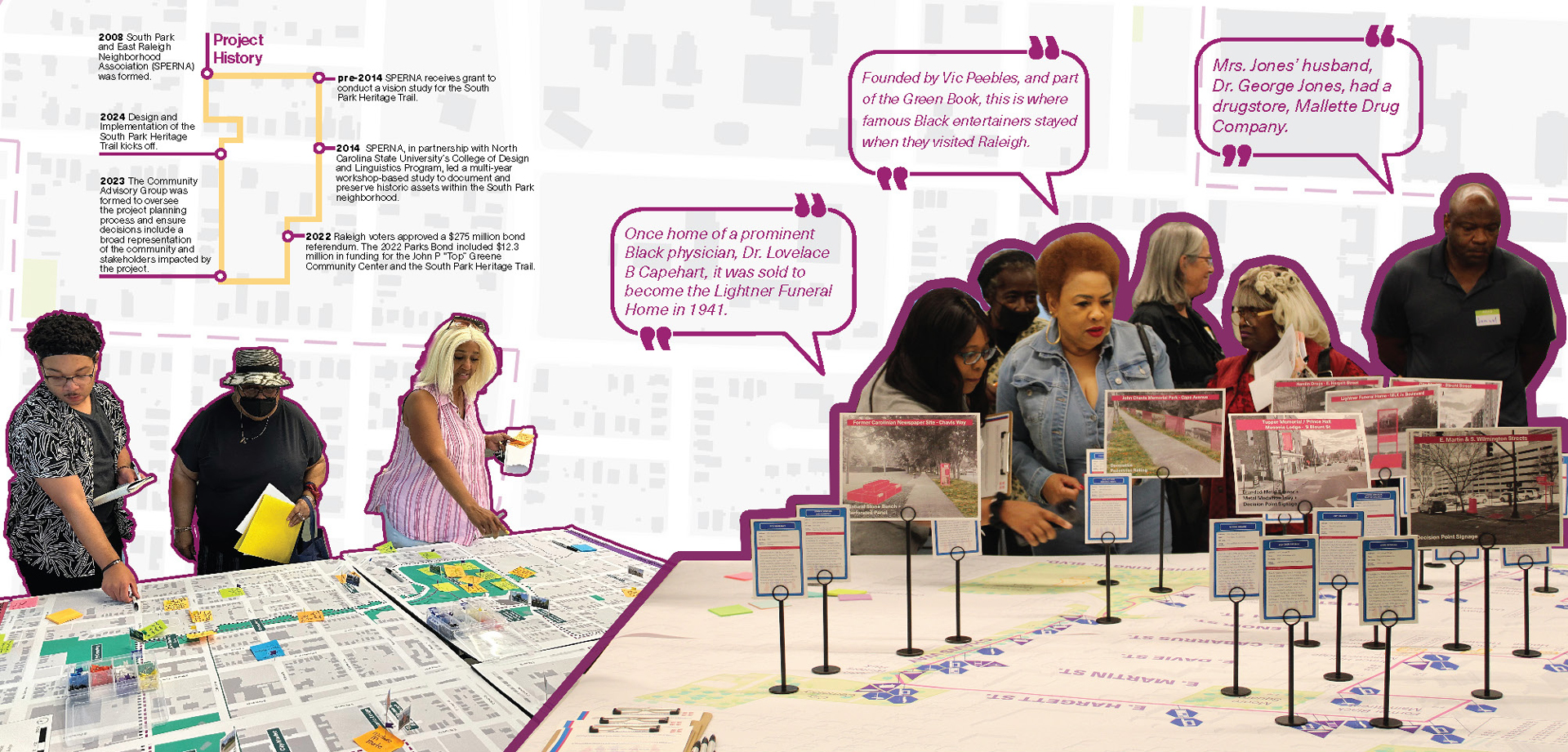
Conversations built connection-each exchange revealing truth, trust, and the roots of identity.
Co-creation and the Restoration of Trust
Rebuilding trust required a different approach. Rather than asking residents to react to a design, the team invited them to shape it. Each dialogue informed a decision on materials, interpretive themes, or the placement of an element. Every story added nuance to the trail’s form and character. This approach shifted authorship to the community. It respected lived experience as expertise and created a shared sense of ownership. The result is a project that authentically reflects the neighborhood’s identity, shaped in partnership with the community members who define it.
Placekeeping as Guiding Philosophy
The trail is grounded in placekeeping. This approach maintains connection to the past, respects what has survived, and brings attention to the histories that once shaped the neighborhood. Four principles shaped the work. Cultural identity informed every design move, visible and invisible legacies were treated as equal sources of knowledge, natural systems helped guide this alignment, and community voices remained central throughout the process. Together, these principles support a landscape that acts as a living archive where collective memory helps inform how the neighborhood supports and strengthens itself.
Framework and Narrative Integration
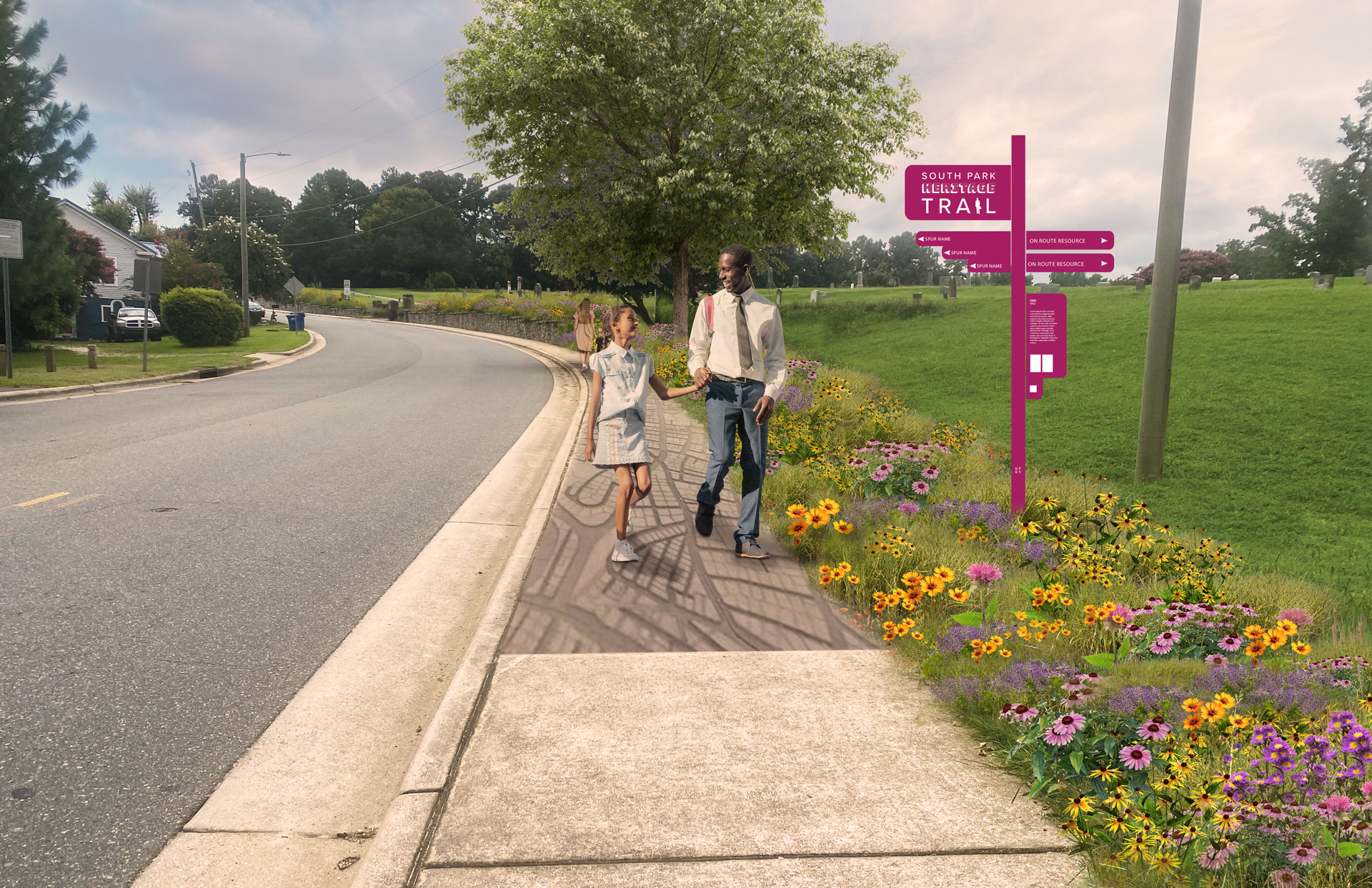
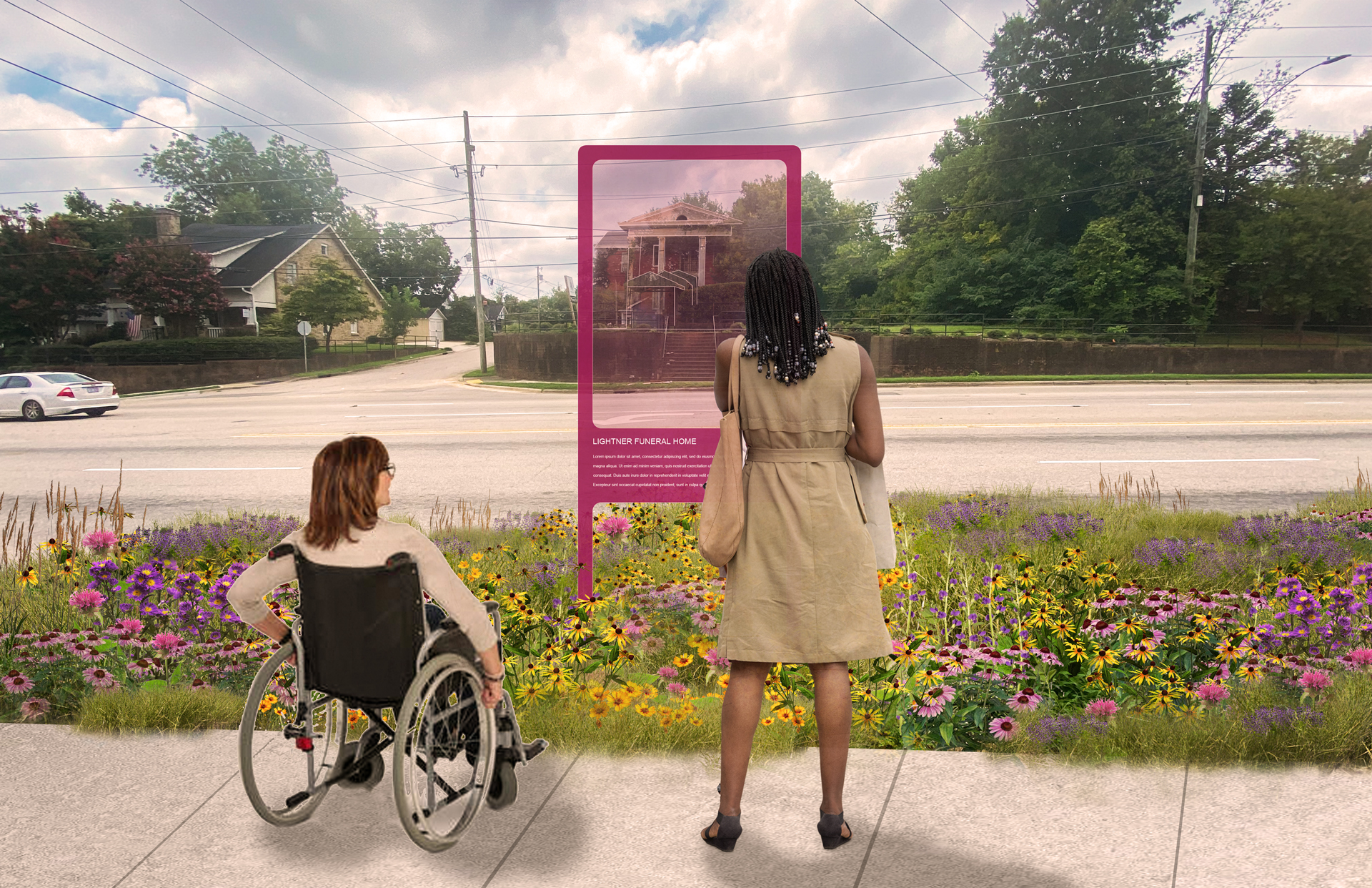
Early analysis revealed ten storytelling themes tied to local figures, meaningful places, and community traditions. These themes shaped both the route and the interpretive strategy. Design elements, including medallions, banners, railings, and viewfinders transform everyday infrastructure into opportunities for reflection. Wayfinding becomes storytelling. Each element supports the narrative spine that brings together dispersed pieces of history. Visitors move through a sequence of experiences that shows how the neighborhood grew, endured, and adapted.
Ecological and Cultural Synthesis
GIS mapping helped balanced accessibility with environmental restoration. Slope, shade, and stormwater patterns guided the alignment, ensuring the trail meets universal access standards while supporting ecological health. Green infrastructure provides canopy renewal and pollinator habitat. Interpretive design restores cultural visibility in the same spaces where ecological systems are strengthened. The result is a landscape where environmental and cultural resilience reinforces one another.
Living Heritage in the Public Realm
Interpretive features transform intangible heritage into a series of living installations. Viewfinders frame the past in the present, medallions give language to resilience, and materials reflect the durability of East Raleigh South Park. Each detail is purposeful. The trail listens, learns, and remembers while inviting participation, reflection, and pride. The project reframes planning as a form of care, demonstrating how legacy preservation can create spaces that hold both history and possibility.