Protecting Denver’s Urban Forest Through a Shared Strategic Plan
Growing and maintaining trees in Denver is not easy. The area’s semi-arid climate and limited native tree species have always made the urban forest a careful balance of effort and intention. Over time, however, where trees were planted and where they were not became tied to patterns of wealth, infrastructure investment, and policy decisions that continue to shape the city today. The Denver Urban Forest Strategic Plan began with a clear purpose, to understand those patterns and provide a path toward a healthier, more equitable urban forest for the future.
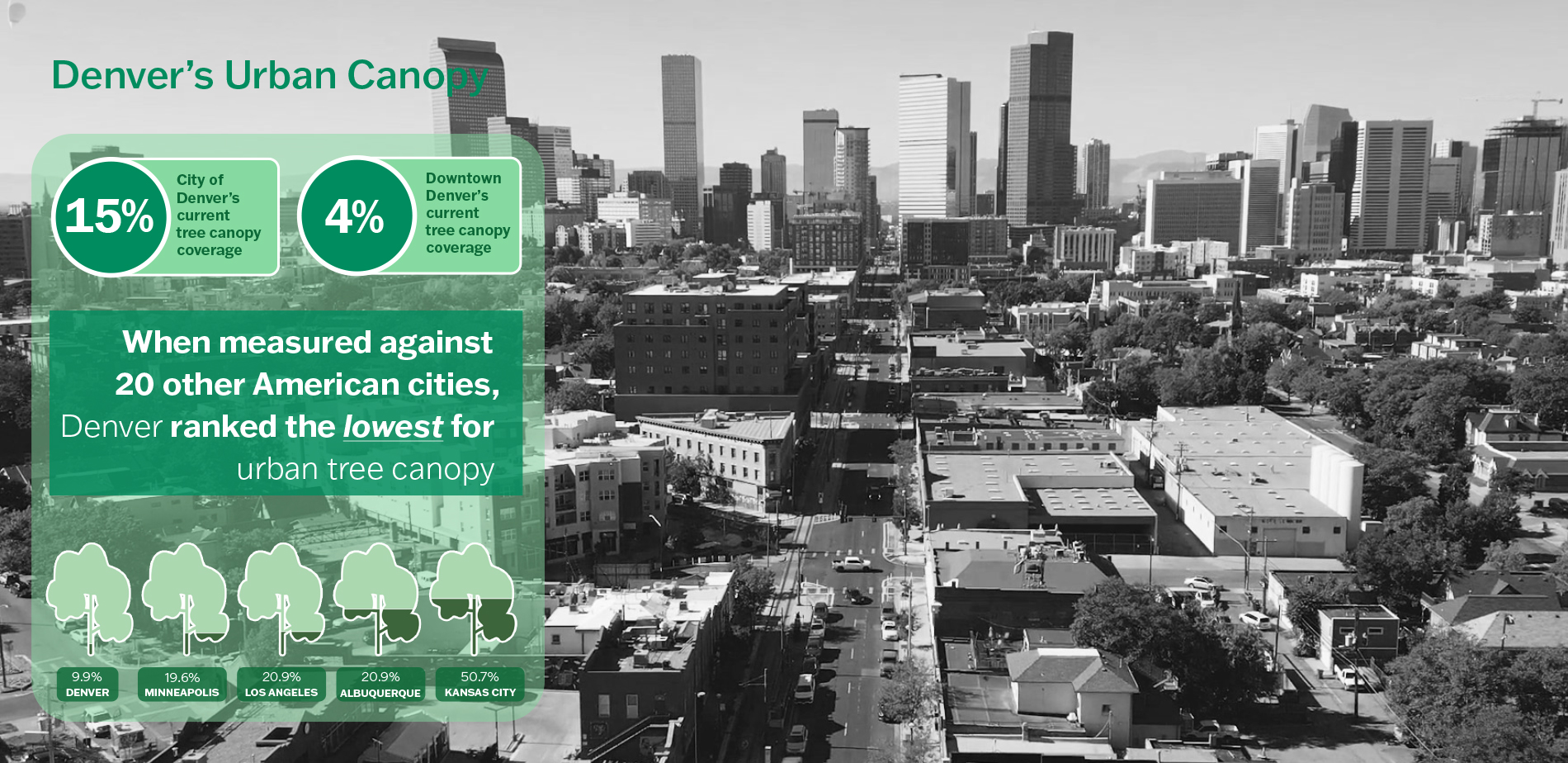
Denver’s urban forest was significantly lagging behind comparable cities, sparking the need to develop Denver’s first Urban Forestry Strategic Plan.
Understanding How We Got Here
Denver’s urban forest was largely established as the city grew in the late nineteenth and early twentieth centuries. Trees brought from across the country were planted along parkways and in neighborhoods that had the resources to support them. At the same time, working-class and migrant communities saw little investment in trees. Redlining and automobile-oriented development further reduced space for street trees in many neighborhoods, leaving lasting gaps in canopy coverage that persist today.
The Urban Forest Strategic Plan acknowledges this history and its ongoing impact. By pairing historic land use decisions with current data on tree canopy, heat exposure, and social vulnerability, the plan clearly shows where investment has been lacking and where it is most needed. This work helped clarify that gaps in Denver’s tree canopy are the result of historic planning and investment decisions, rather than a lack of interest from the communities most affected.
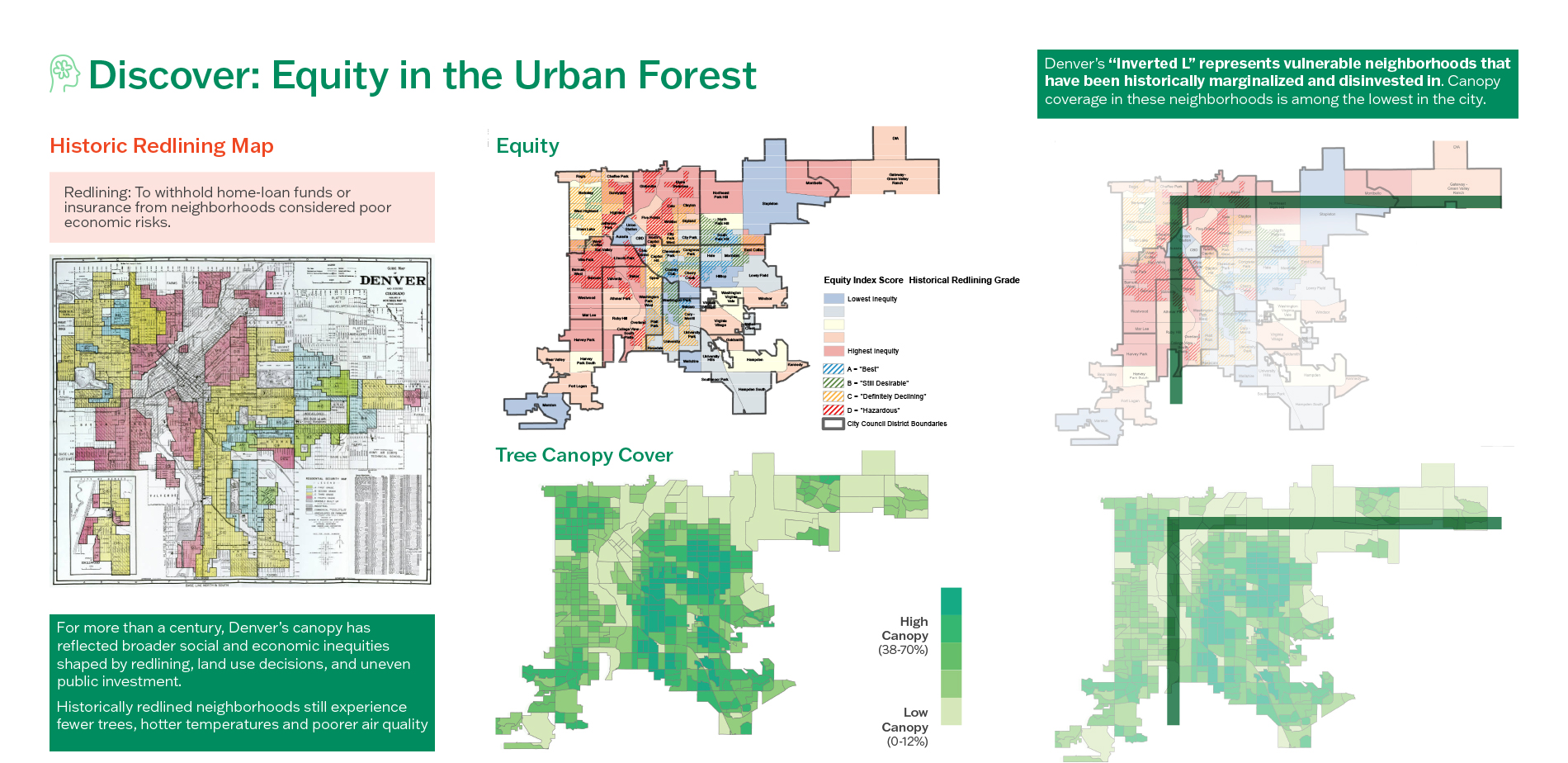
The “Inverted L” highlights the vulnerable neighborhoods that have been historically marginalized which is evident through the lack of tree canopy.
Making the Case for Change
Recent research confirms what many neighborhoods already experience, trees play a critical role in public health, economic stability, and climate resilience. The planning team analyzed existing canopy data alongside equity and human comfort indicators, revealing a clear pattern of disparity that follows the historically migrant and industrial communities along the city’s two interstate highway corridors and the Platte River. This pattern highlights neighborhoods that face the greatest challenges and the fewest tree-related benefits, creating a data-driven starting point for action.
The analysis also shows that Denver’s overall canopy coverage is low, and that many trees are relatively young and limited in species diversity. This makes the urban forest more vulnerable to disease, extreme heat, and climate change. Addressing these challenges requires treating trees not as amenities, but as essential infrastructure that deserves the same level of planning and coordination as streets and utilities.
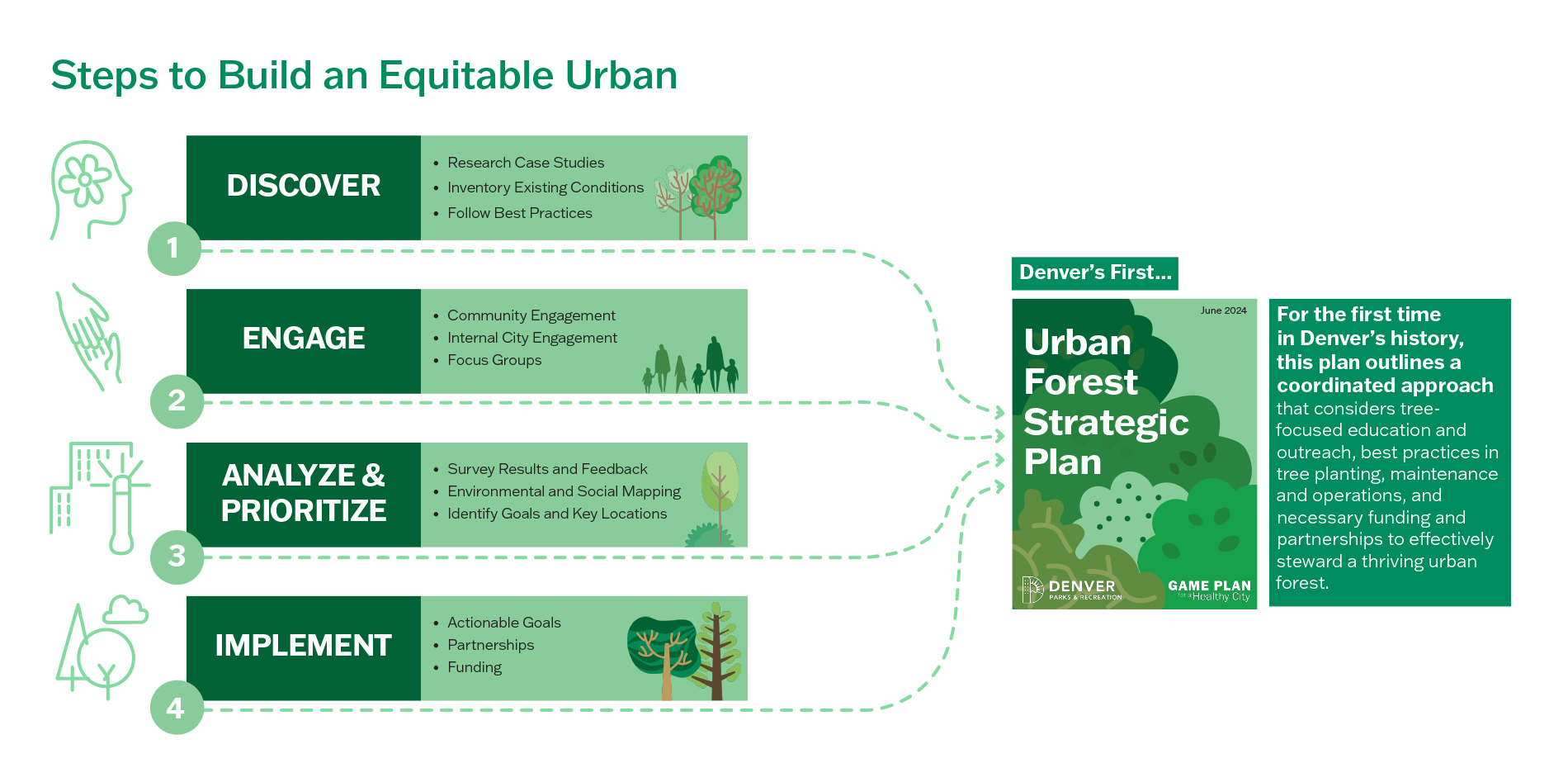
While equity and resilience factors are key baselines for the Strategic Plan, an understanding of the makeup of the urban forest was also critical.
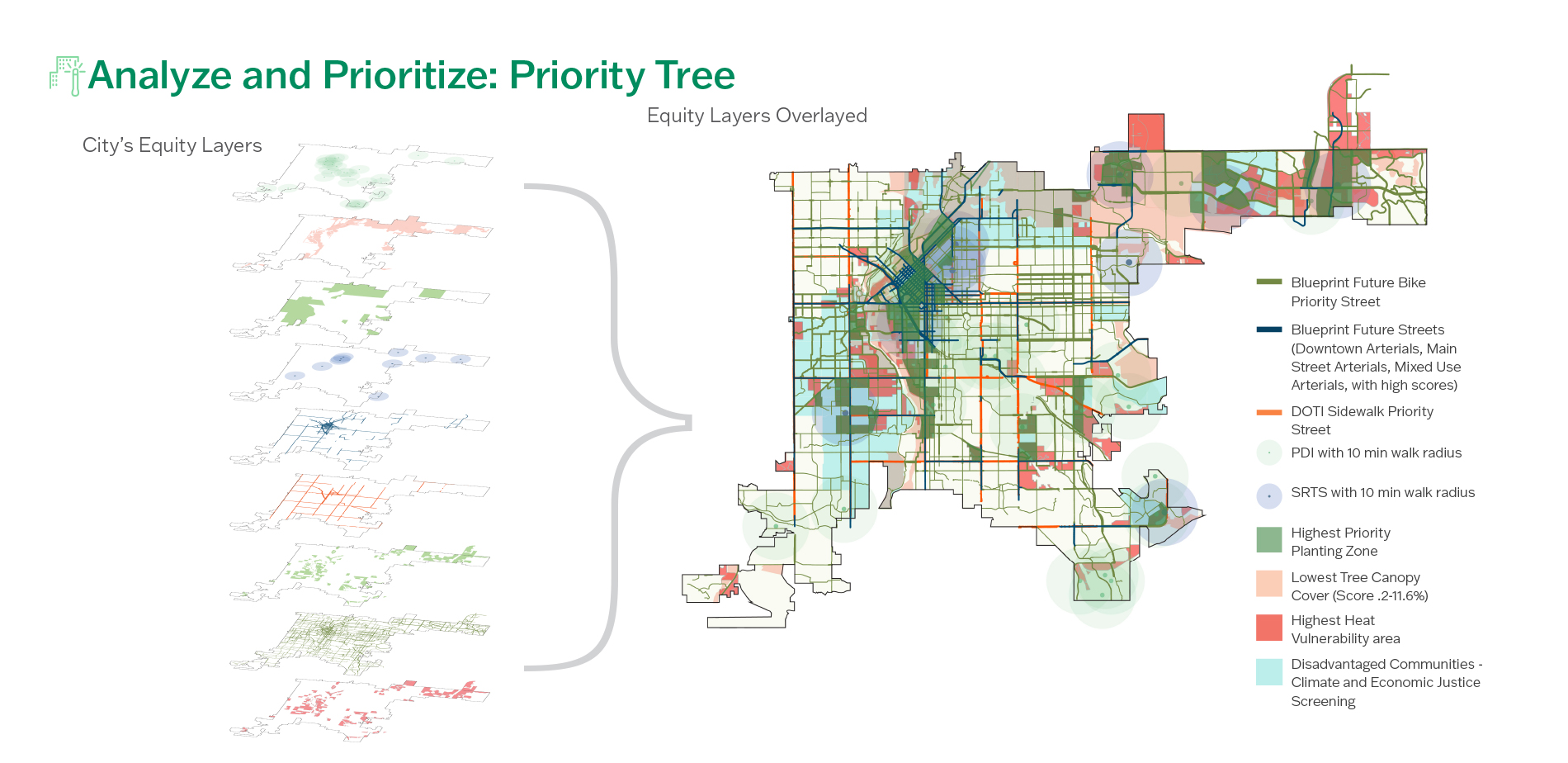
The Priority Tree Network pulls together a number of the city’s equity measurements and policies to identify a priority investment network.
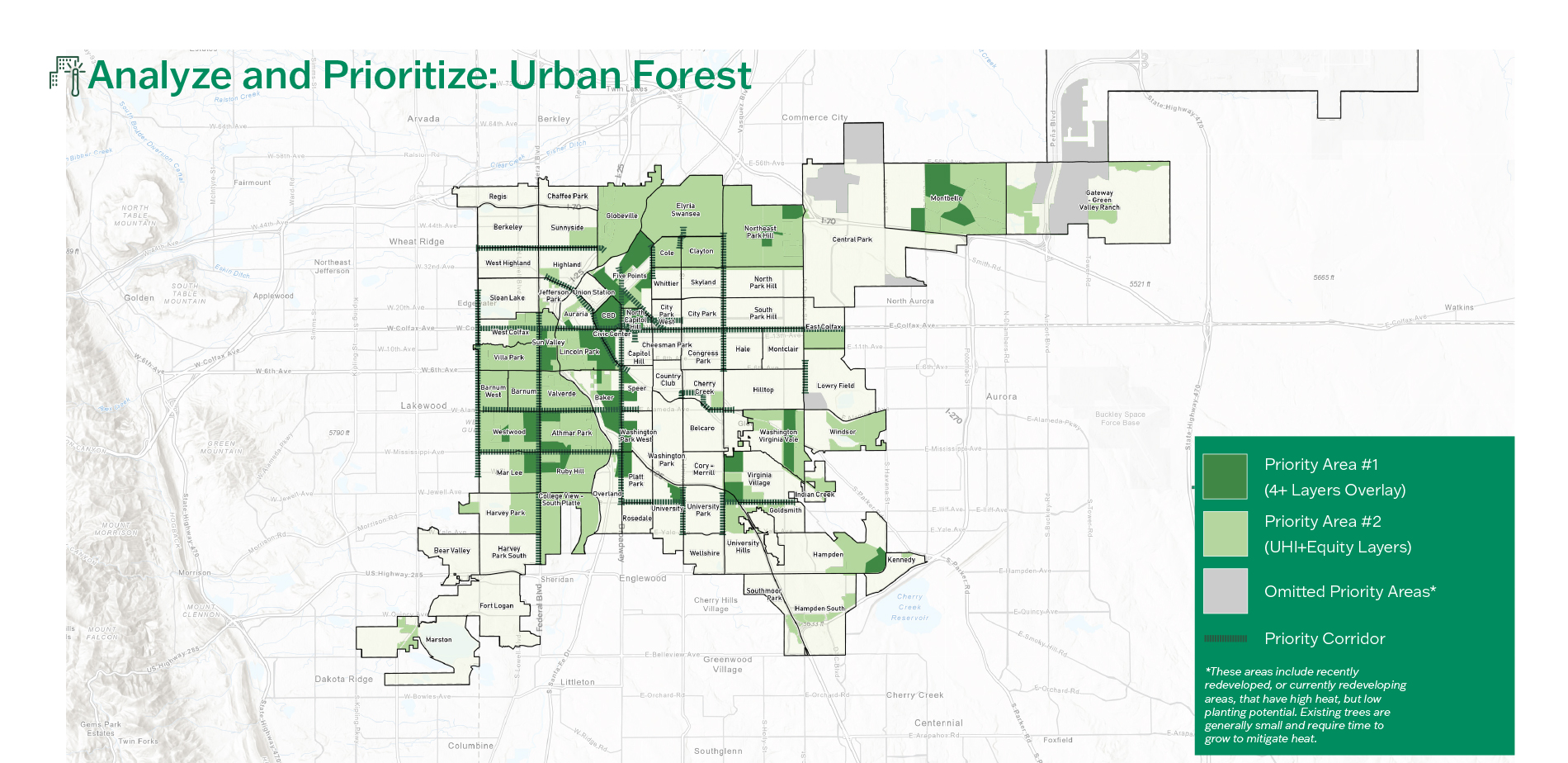
Increasing the tree canopy in neighborhoods with low existing canopy was of most importance to the community; strategies to do so are the focus.
Building a Community-Informed Strategy
Community engagement is central to shaping the plan. The project team reached residents across the city through multi-lingual surveys, open houses, and focus groups, with special attention to neighborhoods most affected by limited tree cover. More than 5,000 touchpoints with residents helped define priorities and ensured the plan reflects lived experience, not just data.
At the same time, the planning process brought together city agencies that each play a role in managing trees but have historically worked independently. Through structured conversations and a multi-day facilitated symposium, the plan identified gaps and overlaps in policy and responsibility. The result is a coordinated strategy that aligns regulations, builds community stewards, and positions Denver’s urban forest as critical infrastructure that supports health, resilience, and long-term livability.
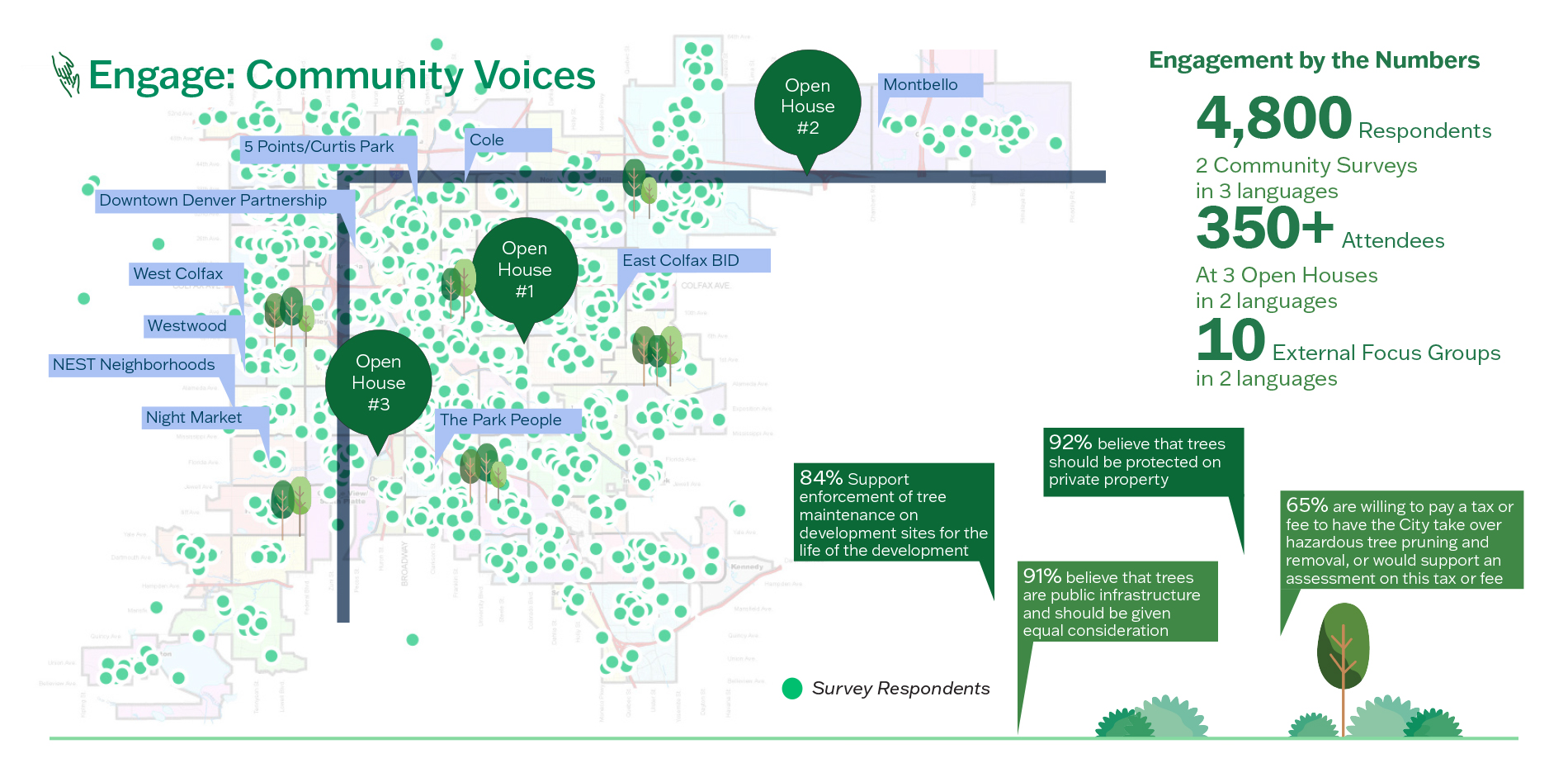
Not only was feedback generated from across the city, but it provided clear direction on the appetite for policy change.
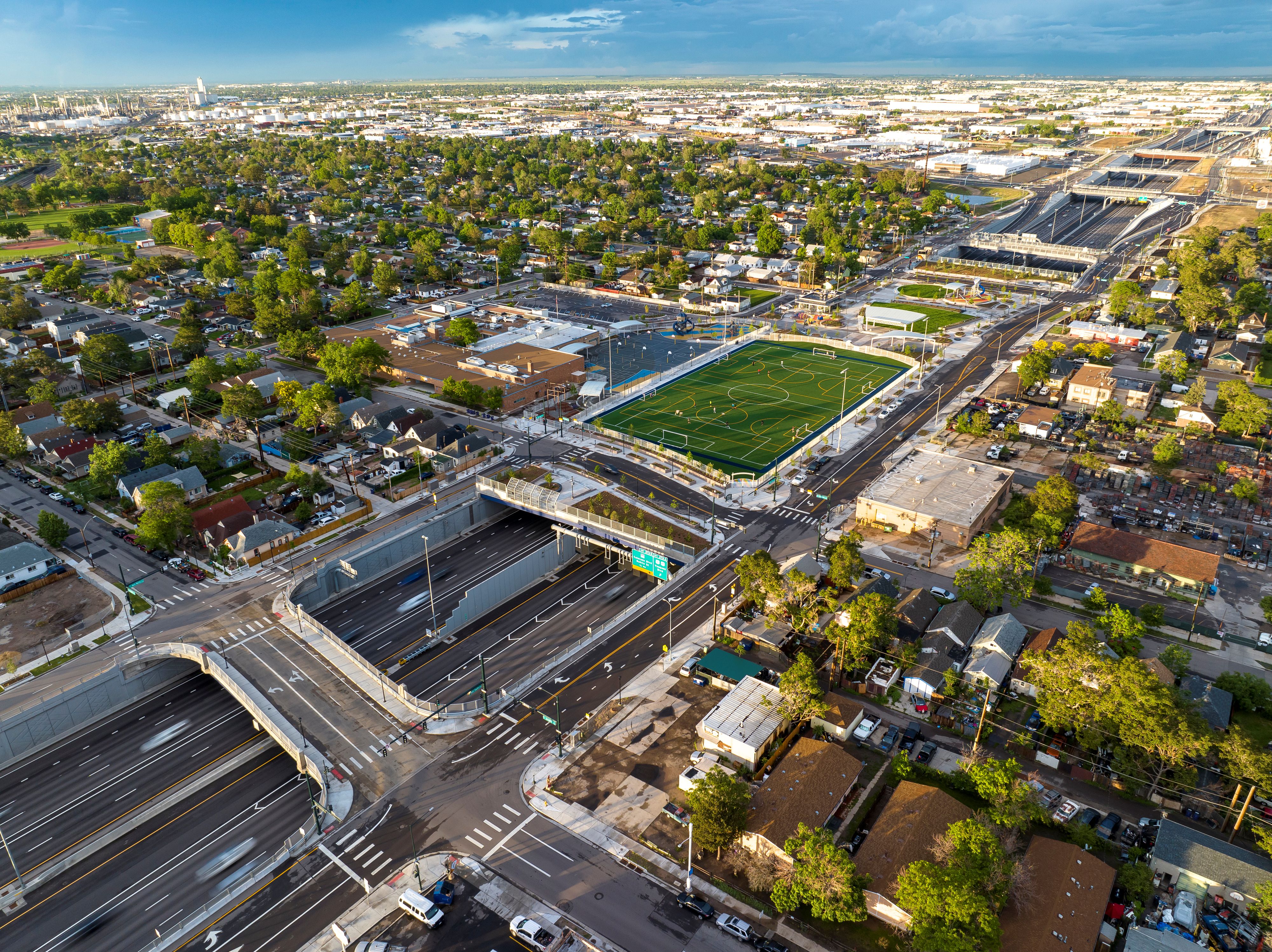
Above image courtesy of Ashley Gutierrez / Not Another Film Lab; primary photo credit: Divine Ramazani / Green Dot Coalition