At a time when public funding for land conservation has diminished and escalating land values place preservation beyond the reach of many rural communities, the responsibility for safeguarding working and open landscapes increasingly rests with private landowners. At Deadwood Ranch, a moment of ownership transition became an opportunity for conservation.
The Changing West
Since 1982, the U.S. Department of Agriculture estimates that more than 4.4 million acres of agricultural land have been lost across the Mountain West, including 1.25 million acres in Colorado. Ownership transitions often accelerate this loss, as economic pressures drive fragmentation and subdivision—permanently compromising land integrity under Colorado’s subdivision exemption law.

History
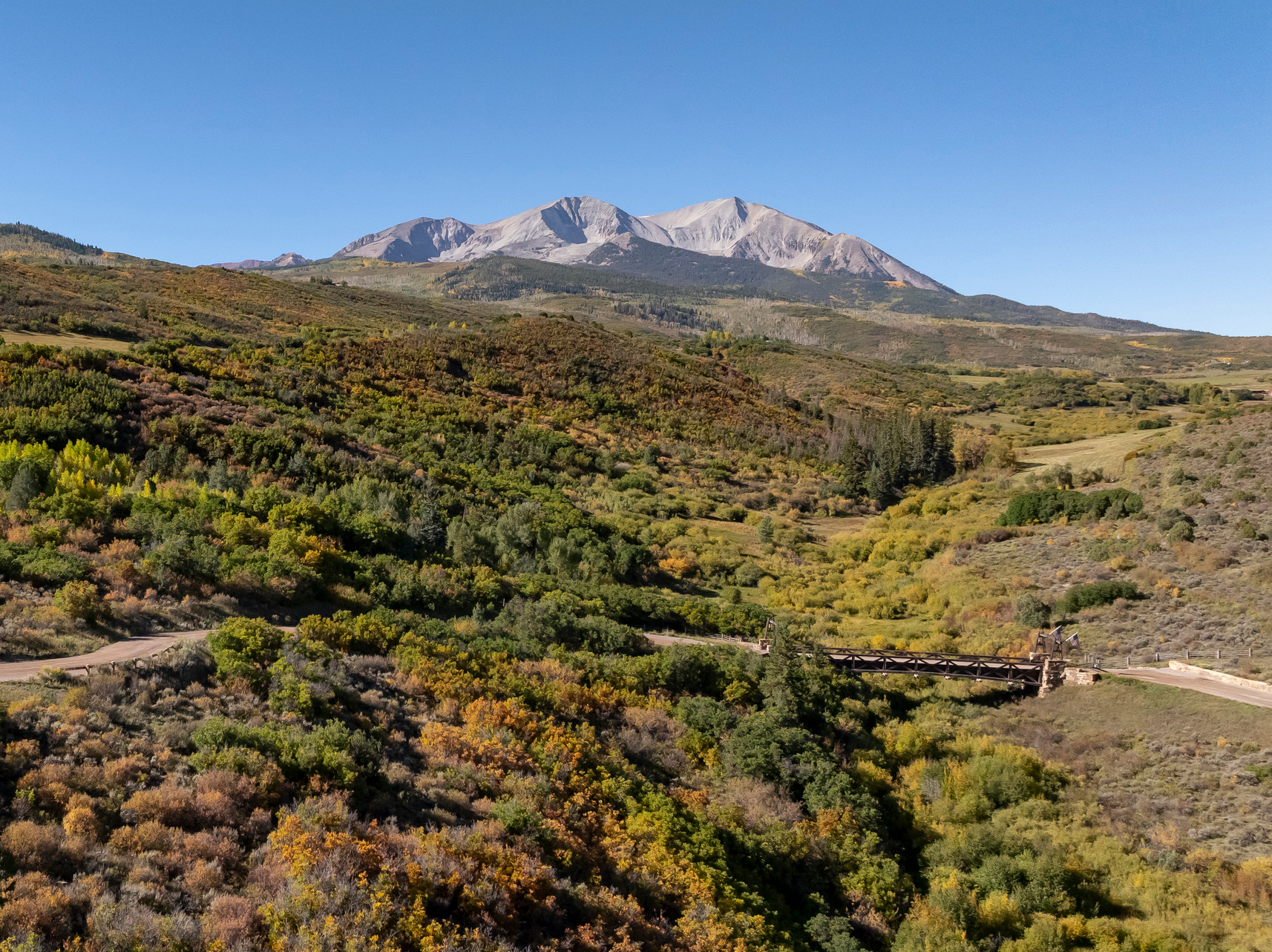
Resting under the shadows of Mount Sopris, Deadwood Ranch is one of the Roaring Fork Valley’s earliest homesteads. In 1886, under the provisions of the Homestead Act, Winfield S. Swearingen began cultivating the land – establishing pastures and irrigation ditches that helped shape one of the valley’s enduring rural landscapes – followed by the Fender family who stewarded the ranch for over 40 years, extending its ranching tradition. In 2008, the property sold to a new owner committed to sustaining its legacy.
Analysis of Critical Natural Resources
Understanding the land’s intrinsic qualities across scales established the foundation for a conservation strategy that extends beyond property boundaries. The 379-acre ranch lies within one of Colorado’s most ecologically rich valleys, linking higher-elevation public lands to forage areas along the valley floor and supporting critical winter range and migration corridors. Here, a mosaic of riparian corridors, irrigated hayfields, sagebrush steppe, shrublands, and mixed conifer forests creates diverse ecological conditions across the site. Furthermore, significant portions of the property fall within a county-designated scenic corridor, requiring new improvements to preserve ridgelines and protect the valley’s rural character.

Establishing Conservation Values
The entitlement process, led by land planner Mitch Haas and Design Workshop as landscape architect, resulted in a framework that represents an exceptional act of stewardship. Guided by six conservation priorities – wildlife, farming, ranching, water, scenic quality, and historic preservation – the project secured support from elected officials, conservation nonprofits, and land trusts to rezone the property as a Conservation Development Planned Unit Development.
Preserve scenic views and rural character
Development is sited out of view, maintaining the valley’s open landscape.
Rehabilitate historic structures
Original homestead buildings are restored, carrying forward the ranch’s legacy.
Sustain agricultural production
Irrigated meadows remain active, supporting long-term viability.
Support wildlife habitat and movement
Continuous corridors allow species to move freely across the landscape.
Maintain active ranching operations
Open rangeland continues to function as working ground.
Protect water systems and watersheds
Creeks and irrigation infrastructure are preserved for ecological and community benefit.

Through restricting land use, transferring development rights offsite, and clustering development, the process permanently protected 97% of the land while sustaining agriculture and habitat. Together, these priorities shape a Conservation Development framework that concentrates development within a 3.68-acre envelope while protecting the larger landscape.
Designing in Response to Place
Design reinforces the logic of the land. Structures, designed by Bozeman-based architects Pearson Design Group, are clustered and set into the terrain, reducing visibility and reflecting traditional ranch patterns. Regional materials root the architecture in place, while drought-tolerant plantings and informal arrangements respond to the surrounding ecology. Each intervention is measured and intentional, supporting the performance of the landscape over time.


A Model for What Endures
As conservation increasingly relies on private initiative, Deadwood Ranch offers a clear path forward. Through collaboration, policy, and design, the project transforms a moment of change into lasting stewardship.
Today, the ranch continues to work as it always has since the late 1800s. Fields remain productive, wildlife corridors stay intact, and water systems continue to shape the land. Deadwood Ranch is not preserved as a static landscape. It is sustained as a living system, designed to endure.