Parks and open space shape how people experience their city every day. They provide places to gather, play, reflect, and connect with nature. They also function as essential infrastructure for health, economic vitality, and creating welcoming places where people feel they belong.
In Erie, Pennsylvania, the city is taking a fresh look at how its parks, recreation programming, and open spaces serve residents today and in the future. The city has more than 50 parks spread across its neighborhoods, creating a strong foundation for recreation and public life; however, the condition of park spaces, the quality of facilities, access to programming and experiences, and the perception of safety can vary across the city.
To guide future investment, the City of Erie is developing Erie Outside: Play. Explore. Belong., a 20-year Comprehensive Parks, Recreation, and Open Space Plan. Design Workshop is partnering with the City, alongside Ballard*King & Associates and Kidder Architects as consultants, to help shape a shared vision, establish clear priorities, and identify the staffing, funding, and partnerships needed to implement it. A study committee representing a broad range of organizations and community interests is also guiding the process, helping ensure the plan reflects local priorities and builds long-term support.
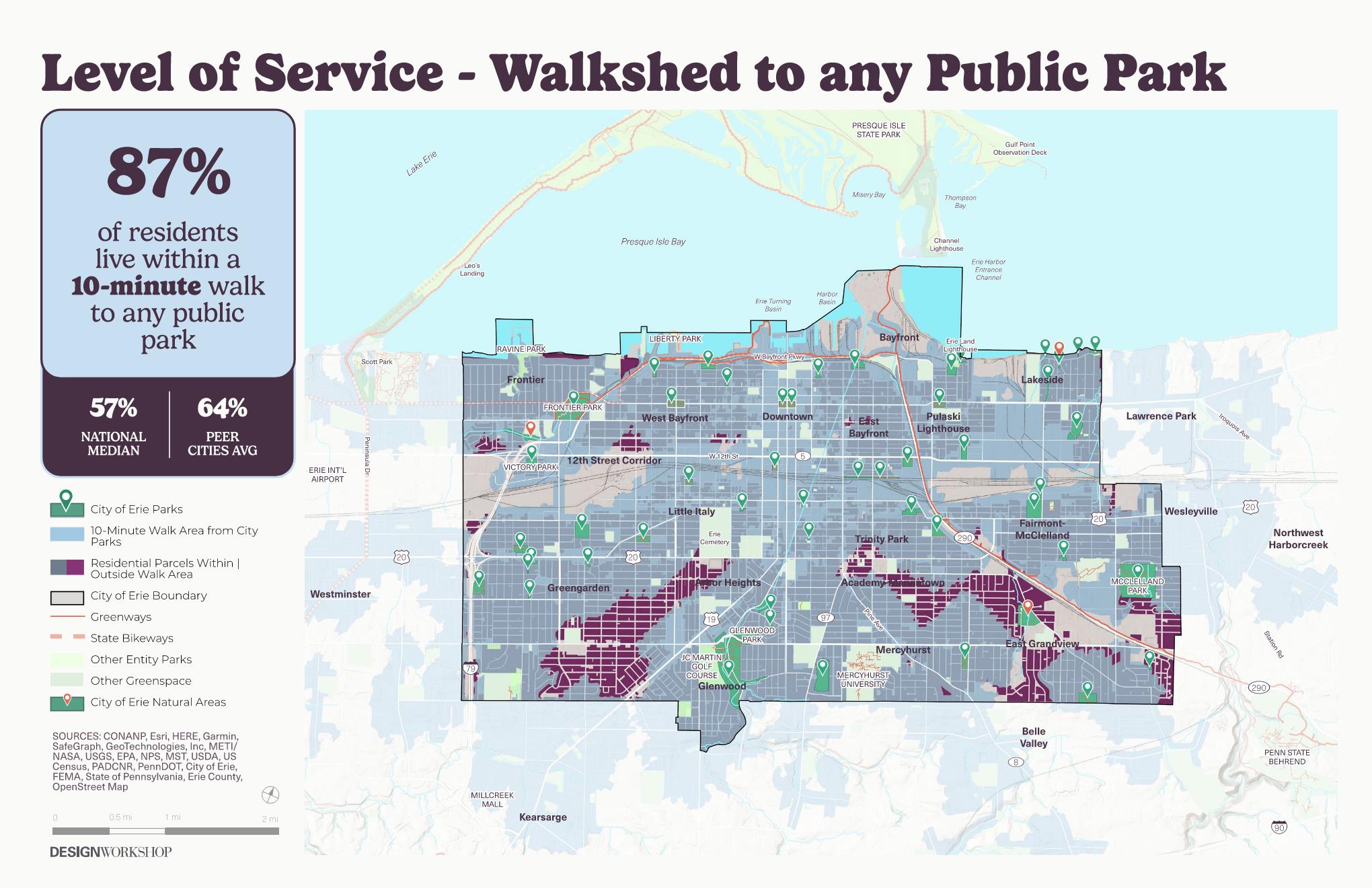
Map showing that 87% of Erie residents live within a 10-minute walk of a park when all public parks are considered, though park quality and experiences vary across the system.
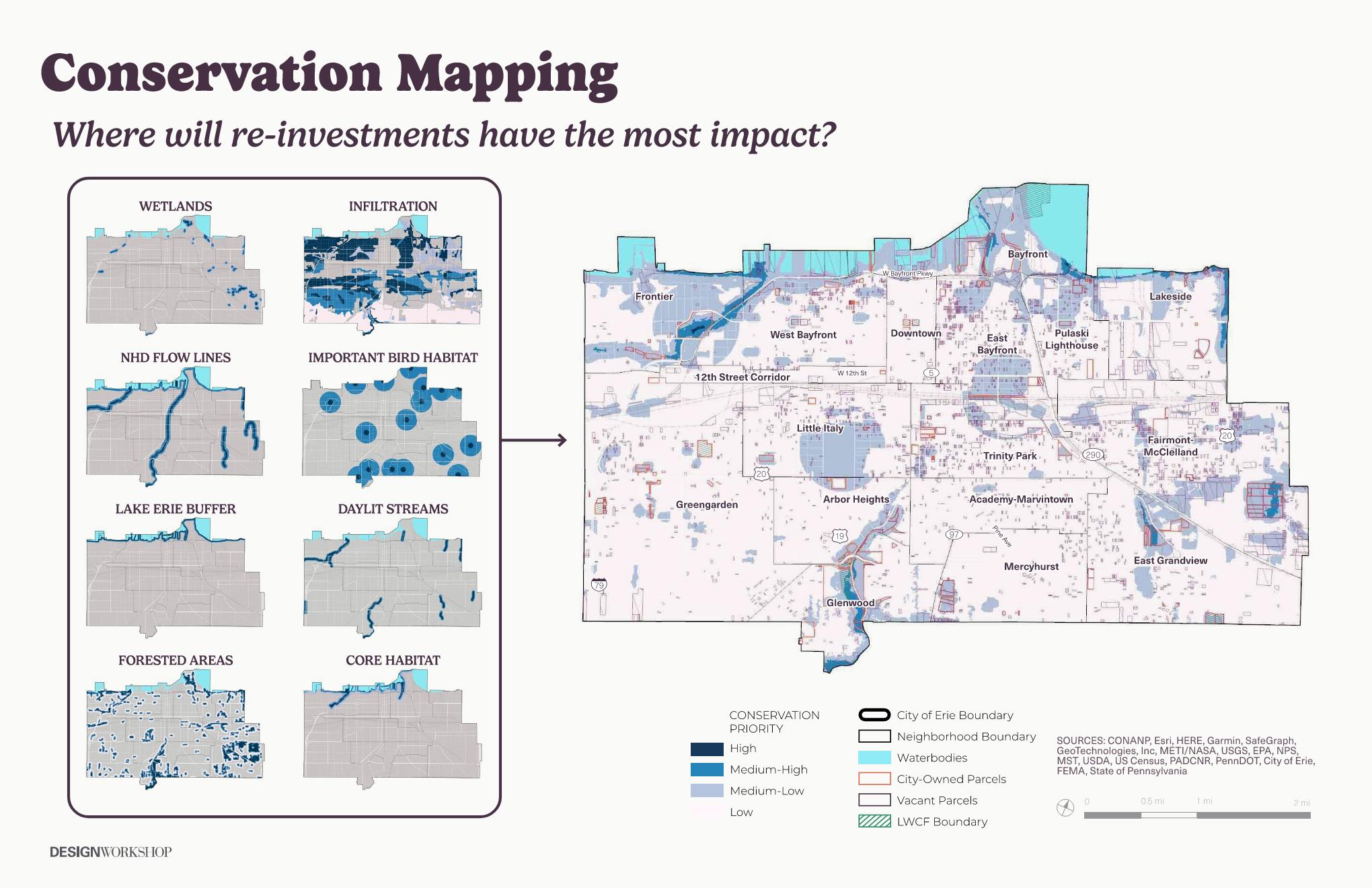
Conservation priority mapping identifies high-value landscapes, forested habitats, and riparian corridors that support ecosystem health and water quality, guiding where protection, acquisition, and stewardship should be prioritized.
Meeting People Where They Are
The process begins with listening. A strong plan reflects the voices of the people who will use it. That means meeting residents where conversations can happen naturally and making it easy to participate in ways that feel familiar and accessible.
During the Celebrate Erie festival in summer of 2025, the planning team activated a vacant downtown storefront as a temporary engagement space. People wandered in to share ideas, park stories, mark maps, and talk about the parks they love and the improvements they hope to see. Interactive tools, including hands-on activities and visual prompts, helped make conversations approachable for all ages.
Across the city, staff met residents at more than 20 neighborhood events, bringing the conversation into familiar everyday spaces. Youth engagement has been an important part of the process as well, with hands-on worksheets, 3D-printed park kits, and informal discussions that invited young people to imagine how parks could be more fun, more welcoming, and more their own.
Surveys, focus groups, and stakeholder interviews uncovered a vibrant network of partners, organizations, and grassroots leaders already invested in Erie’s parks and excited to deepen partnerships with the City to activate spaces, expand programming, and think more broadly about the role of parks and recreation.
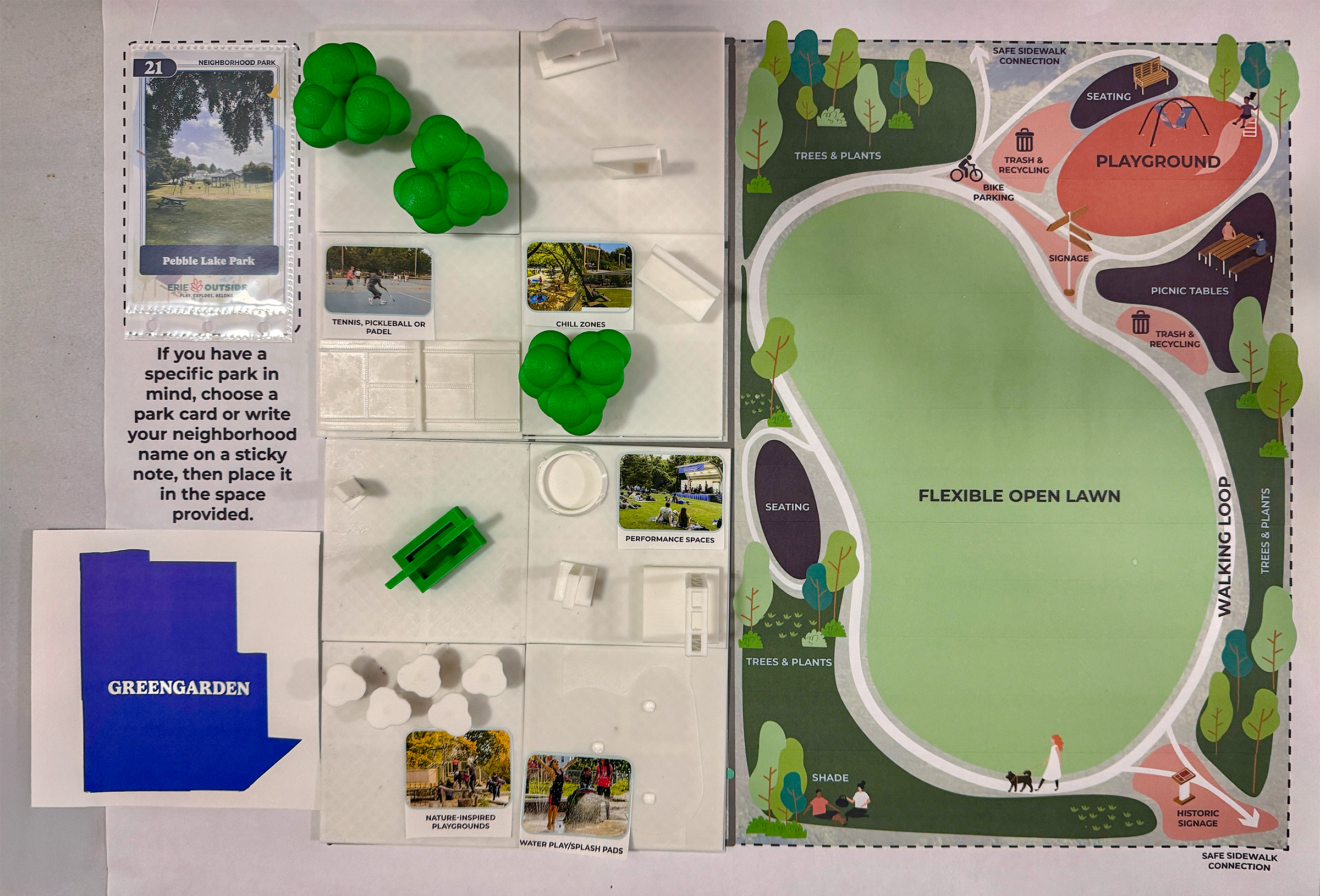
Participants use 3D Park Kits to build their own neighborhood park, adding features and ideas to create a space that reflects what they want to see in their community.
Understanding the System
The planning process pairs community input with system-level analysis. Erie has a strong foundation of access, with 76% of residents within a 10-minute walk of a city park, increasing to 87% when all public parks are included, well above the national median.
However, proximity does not always translate to access and quality of experience. In many areas, gaps in sidewalks, paths, and safe street crossings make it difficult to comfortably and safely walk to parks.
At the same time, the system reflects additional challenges. With lower acreage per capita, aging facilities, and limited staffing and funding capacity, many parks require improvements related to safety, accessibility, and basic comfort. Seasonal limitations also affect how the system is used, especially during Erie’s long winter, as the lack of indoor recreation facilities reduces opportunities for year-round programming and access.
Together, these factors are shaping a clear direction: focus on improving the quality and accessibility of park experiences while introducing a decision-making framework to help the City prioritize investments and make steady, incremental progress.
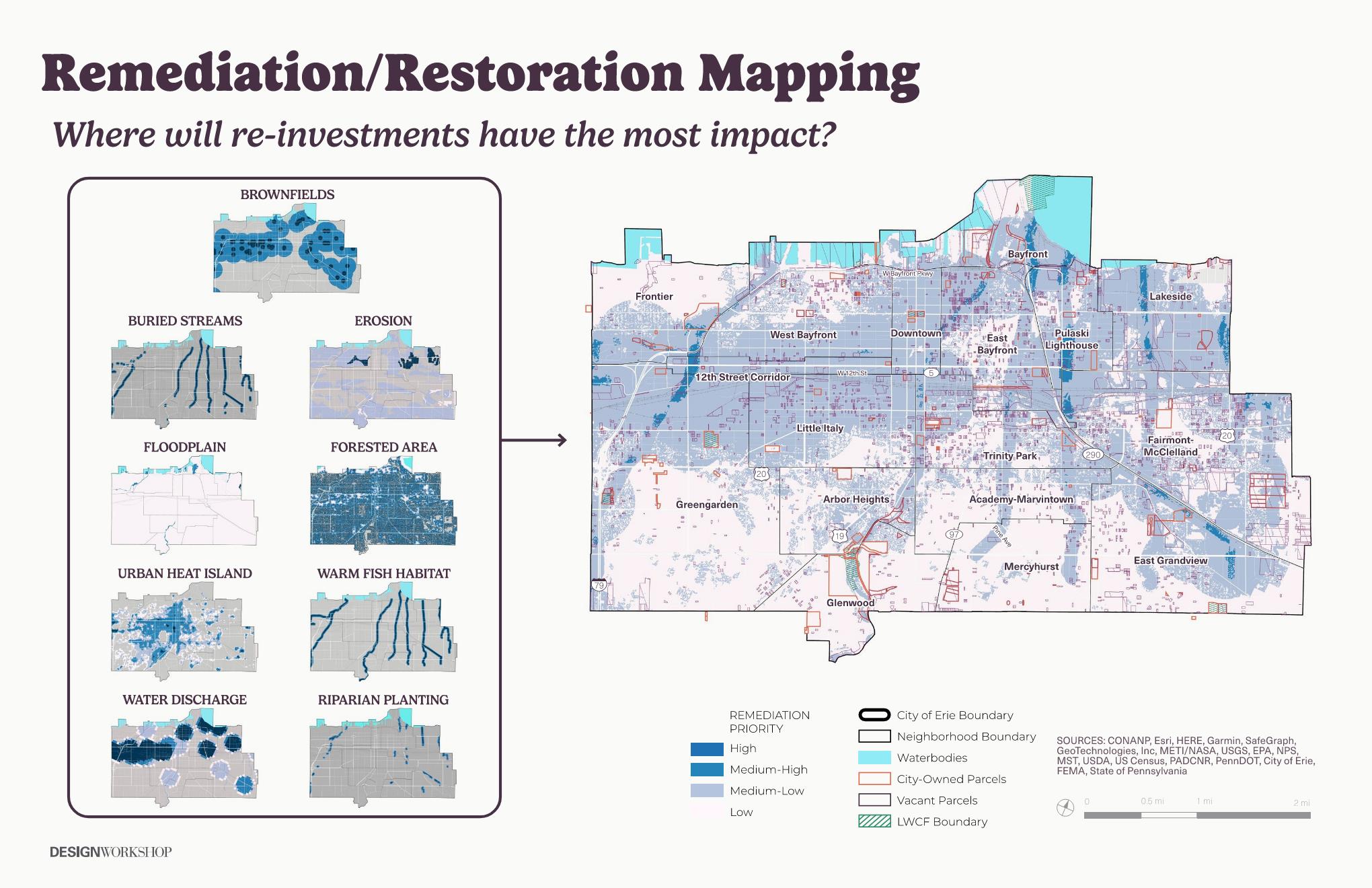
Restoration and remediation mapping highlights degraded or contaminated sites—such as brownfields, heat islands, and fragmented landscapes—where reforestation, stream daylighting, and stormwater improvements can restore ecosystem function and strengthen resilience.
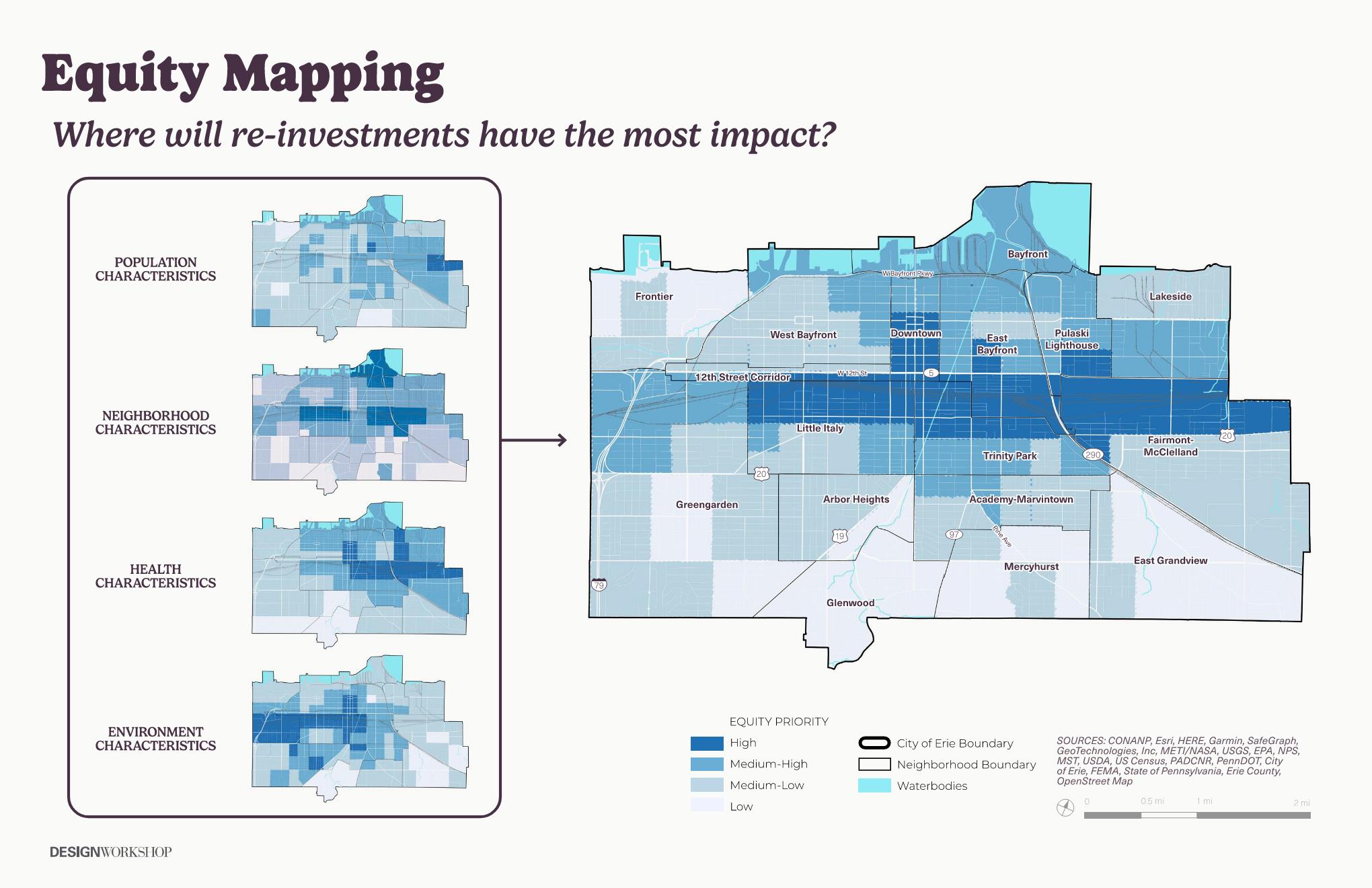
The Equity Investment Zones map combines population, neighborhood, health, and environmental indicators—tailored to Erie’s context—to highlight where park investments can have the greatest community impact.
Turning Legacy into Opportunity
Erie’s industrial legacy has left a network of underutilized sites and brownfields across the city. These areas present an opportunity to reconnect neighborhoods, expand access to the waterfront, and strengthen links to regional assets like Presque Isle. When approached carefully, these projects do more than add green space — they help heal damaged landscapes, improve environmental health, and create new places for community life by restoring riparian corridors, remediating brownfields, and transforming legacy conditions into healthier, more connected places.
Shaping the Path Forward
The draft plan is currently in progress, incorporating input from the community and stakeholders alongside findings from the system inventory, analysis, and best practices.
To move from vision to implementation, the plan introduces a clear set of prioritization criteria to guide decision-making and phasing including park condition, quality of experiences, access and connectivity, restoration and conservation potential, and equity priority areas, helping the City focus resources where they will have the greatest impact. By building on a strong distribution of parks while addressing gaps in access, connectivity, safety, quality, and year-round use, Erie Outside establishes a clear path forward, focused on improving access, comfort, and connection; supporting active and vibrant places; strengthening natural systems; and investing in long-term stewardship.
The result is a more connected, resilient park system designed around everyday experience, where residents gather, play, explore, and feel a sense of belonging.